Planning a trip to Costa Rica? Whether you're a backpacker chasing waterfalls, a family looking for wildlife adventures, or a solo traveler ready to embrace the jungle, this guide is your starting point. Costa Rica is one of the most rewarding destinations in the world — but it also has its quirks, and knowing what to expect before you land will make all the difference.
After years of living in and exploring Costa Rica, we've put together the most important things to know so you can travel smarter, spend less, and enjoy more. Let's dive in.

Quick Facts About Costa Rica
🏢 Capital | San José |
✈️ Main Airports | SJO (San José) · LIR (Liberia, Guanacaste) |
💰 Currency | Costa Rican Colón (₡) · USD widely accepted |
🗣️ Language | Spanish (English spoken in tourist areas) |
🌡️ Climate | Tropical year-round · Dry season Dec–Apr · Rainy season May–Nov |
🛂 Visa | Not required for the US, Canada, EU (up to 180 days) |
💧 Tap Water | Safe in most tourist areas |
🔌 Electricity | 120V / 60Hz (same as North America) |
🕕 Sunset | Around 5:30–6:00 PM year-round |
1. Costa Rica Is NOT Cheap — Budget Accordingly
This is the most important thing first-time visitors get wrong. Many travelers assume that "Central America" automatically means budget travel. It doesn't — not in Costa Rica.
Compared to neighbors like Guatemala or Nicaragua, Costa Rica is significantly more expensive. Tours can easily run $80–$150 per person, restaurant prices in tourist areas rival those in the US or Canada, and gas costs around $5–6 per gallon. Boutique eco-lodges, private shuttles, and national park entry fees add up fast.
That said, you can absolutely travel to Costa Rica on a budget if you plan smart:
- Eat at sodas (local family-run diners) where a full casado meal costs $5–8
- Travel during the green/rainy season (May–November) for lower hotel rates and fewer crowds
- Book shared shuttles instead of private transfers
- Visit free beaches — most of the coastline is public access in Costa Rica
💡 Pura Vida Tip: Check our Transportation page and Tours page for the best value options we've curated for every type of traveler.
2. Travel times are much longer than they look on the map
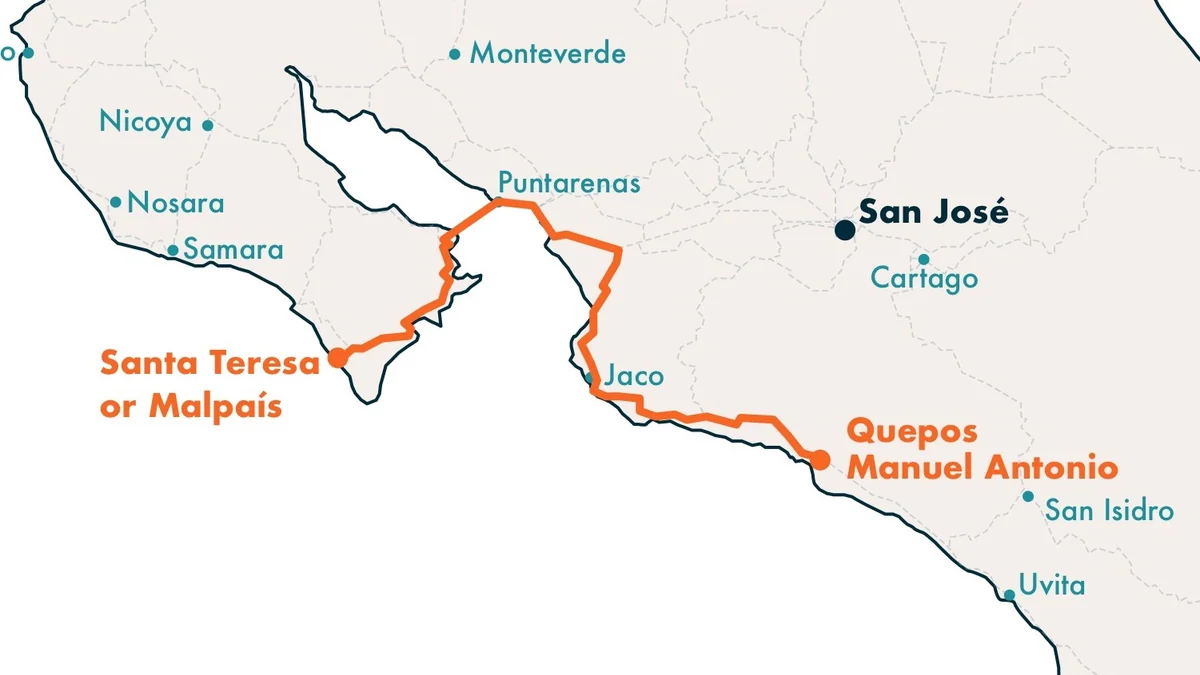
Costa Rica is roughly the size of West Virginia — so you'd think getting around is easy. It's not. The road infrastructure is the main culprit: narrow two-lane highways shared by trucks, mountain switchbacks, river crossings, and construction delays mean that a 100 km drive can easily take 3–4 hours.
Waze is your best friend here (more reliable than Google Maps on local roads), but even its estimates tend to be optimistic.
Real-world examples:
- San José to La Fortuna: ~3.5–4.5 hours
- San José to Manuel Antonio: ~3–4 hours
- Tamarindo to Monteverde: ~3.5–4.5 hours
- Manuel Antonio to Uvita: ~1.5–2 hours
Our advice: Don't try to visit more than 2–3 regions on a single trip. Rushing between destinations robs you of the pura vida experience. For a 1–2 week stay, choose your zones wisely and slow down.
💡 Pura Vida Tip: Always add 30–60 minutes to whatever your GPS says. Never schedule a morning tour if you're arriving from far away the night before.
3. There are two seasons, not four
Forget spring, summer, fall, and winter. Costa Rica runs on a simple two-season calendar:
Dry Season (December – April) — Verano
- Best weather, especially on the Pacific coast
- Peak tourist season with higher prices and more crowds
- Ideal for beach holidays, hiking, and most outdoor activities
Rainy Season (May – November) — Invierno (also called Green Season)
- Afternoon rains are typical, but mornings are usually sunny
- Lush, vibrant landscapes and fewer tourists
- Lower prices on hotels and tours
- Best season to see humpback whales and nesting sea turtles
One important nuance: the Caribbean coast has its own weather patterns. When the Pacific is dry, the Caribbean can be wet, and vice versa. September–October is often spectacular on the Caribbean side (Puerto Viejo, Tortuguero), even when the rest of the country is at peak rainy season.
July/August mini dry spell: Many regions experience a brief dry period called the veranillo ("little summer") in July and August — a great window for summer travelers.
4. U.S. Dollars are widely accepted — But carry some colones
The official currency is the Costa Rican Colón (₡), and the exchange rate hovers around 500–520 colones per US dollar. However, USD is accepted almost universally in tourist areas — hotels, tour operators, restaurants, and taxis.
That said, you'll need colones for:
- Local buses (public transportation)
- Small sodas and market vendors
- Some rural towns with limited tourist infrastructure
Money tips:
- Use ATMs for the best rate — withdraw in colones, not dollars
- Avoid airport exchange booths — the rates are significantly worse
- Don't bring bills larger than $20 — many businesses won't accept $50 or $100 bills
- Visa and Mastercard are accepted almost everywhere; American Express is less so
⚠️ Remote area alert: Places like Drake Bay and Tortuguero have no ATMs. Bring enough cash before heading to isolated destinations.
5. You don't need a visa for short stays — But bring the right documents
Citizens of the United States, Canada, the United Kingdom, Australia, the EU, and many other countries can enter Costa Rica without a visa for up to 180 days. (Note: some sources say 90 days — the actual allowance for many nationalities is now 180 days, but it's worth double-checking with the Costa Rica Tourism Institute before your trip.)
What you'll need at the border:
- A valid passport (must be valid for the duration of your stay)
- Proof of onward travel — a return flight or ticket out of Costa Rica
- Enough funds to support your stay (immigration officers rarely ask, but it's technically required)
No vaccines are required to enter Costa Rica unless you're arriving from certain countries in Africa or South America (yellow fever requirement applies). That said, it's recommended to be up to date on routine vaccines, and Hepatitis A is commonly advised. Always consult your doctor before traveling.
6. Getting around: Rental Car vs. Shuttle vs. Bus
One of the most common questions we get: How should I get around Costa Rica? Here's our honest breakdown:
Rental Car — Best for Flexibility
Renting a car gives you the most freedom, especially for reaching off-the-beaten-path destinations. It's often the most economical choice for families or groups of 4+.
Important things to know:
- A 4x4 or AWD vehicle is highly recommended if you're visiting Monteverde, Santa Teresa, Nosara, the Osa Peninsula, or anywhere during rainy season
- Costa Rica requires mandatory liability insurance that cannot be waived — factor this into your budget
- Use Waze for navigation — it's far more reliable than Google Maps here
- Don't leave anything visible in your parked car — ever. Rental car break-ins are the most common crime against tourists
💡 Pura Vida Tip: Use our exclusive car rental link to get up to 10% off with Adobe Rent a Car, a trusted local company.
Shared Shuttles — Best for Budget Travelers
Shared shuttles connect major tourist destinations on set schedules and are much faster and more comfortable than public buses. They're ideal for solo travelers and couples.
Private Shuttles — Best for Comfort and Groups
Private transfers pick you up where you are and drop you off at your door, on your schedule. Great for families with young children, early flights, or anyone who values convenience.
Public Bus — Best for Budget Backpackers
Costa Rica has a well-connected public bus network that serves almost everywhere. It's the cheapest option by far, but buses are slow, can be crowded, and schedules aren't always reliable. Allow extra time and keep your belongings secure.
Learn more about buses in Costa Rica
Domestic Flights — Best for Long Distances
If you're jumping from San José to the Osa Peninsula or the Caribbean coast, a short domestic flight can save you 4–5 hours of driving for a reasonable price.
7. Tap water is safe in most areas
Costa Rica is one of the few countries in Central America where tap water is generally safe to drink, especially in the Central Valley (San José, Heredia, Cartago) and major tourist towns like La Fortuna and Quepos/Manuel Antonio.
Where to be cautious:
- Coastal areas on the Guanacaste coast (Tamarindo, Nosara)
- Southern Nicoya Peninsula (Santa Teresa, Montezuma)
- Caribbean coast (Tortuguero, Puerto Viejo, Cahuita)
- Remote jungle destinations like Drake Bay and Tortuguero
In these areas, the water may be high in minerals or not treated to the same standard. Ask your hotel — they'll tell you. Many eco-lodges provide filtered water stations.
🌍 Eco Tip: Bring a insulated stainless steel reusable bottle to reduce plastic waste and stay hydrated anywhere in the country.
8. English is spoken in tourist areas — But learn a few words
Spanish is Costa Rica's official language, and while most people working in tourism are comfortable in English, you'll quickly find that not all Ticos (Costa Ricans) speak it — especially in small towns, at local markets, or when dealing with non-tourism businesses.
Learning even a handful of Spanish phrases will earn you instant goodwill and make your trip richer:
Spanish | Pronunciation | Meaning |
Pura vida | Poo-rah vee-dah | All good/great / you're welcome |
Buenas | Bweh-nas | Hello / good day (universal greeting) |
Gracias | Gra-see-as | Thank you |
¿Cuánto cuesta? | Kwan-toh kwesta | How much does it cost? |
Con mucho gusto | Kon moo-cho goos-toh | With pleasure / you're welcome |
"Pura vida" deserves a special mention. It's the national phrase — used as a greeting, farewell, and expression of contentment. Use it liberally and you'll feel like a local.
9. Pura Vida is a way of life, not just a saying
You'll see pura vida on t-shirts, painted on buildings, and hear it in every conversation. But it represents something deeper than a marketing slogan: it's the Costa Rican philosophy of living well, staying positive, and not sweating the small stuff.
Expect things to move more slowly here. Service at restaurants takes time. Buses run on flexible schedules. That dirt road might not have a sign. Embrace it. The unhurried pace is part of what makes Costa Rica so restorative — especially compared to the relentless speed of life in North America or Europe.
10. Wildlife is incredible — But not always where you expect
Costa Rica protects over 25% of its territory in national parks, wildlife reserves, and biological corridors, making it one of the most biodiverse countries on the planet. It's home to 5% of the world's known species despite being less than 0.03% of Earth's land area.
But there are some important realities:
- Sloths aren't everywhere. They live primarily on the Caribbean coast and the South Pacific (Manuel Antonio, Uvita, Drake Bay). They're rare in Guanacaste's dry forests. And even where they live, they're masters of camouflage — a guided wildlife tour dramatically improves your chances of spotting one.
- Monkeys, toucans, and macaws are more commonly sighted. All four monkey species (howler, white-faced capuchin, spider, and squirrel) can be seen depending on the region.
- The best wildlife is in national parks. Manuel Antonio, Corcovado, Tortuguero, Cahuita, and Arenal are top destinations for encounters.
⚠️ Never feed the wildlife. It disrupts their natural diet, makes them dependent on humans, and can cause them to become aggressive. Observe from a respectful distance.
11. The best Eco-Tourism in the world — take advantage of it
Costa Rica is a global leader in sustainable tourism. Before international travelers even knew what "eco-tourism" meant, Costa Rica was building protected areas and incentivizing conservation. Today, the country generates close to 100% of its electricity from renewable sources.
Top nature experiences you shouldn't miss:
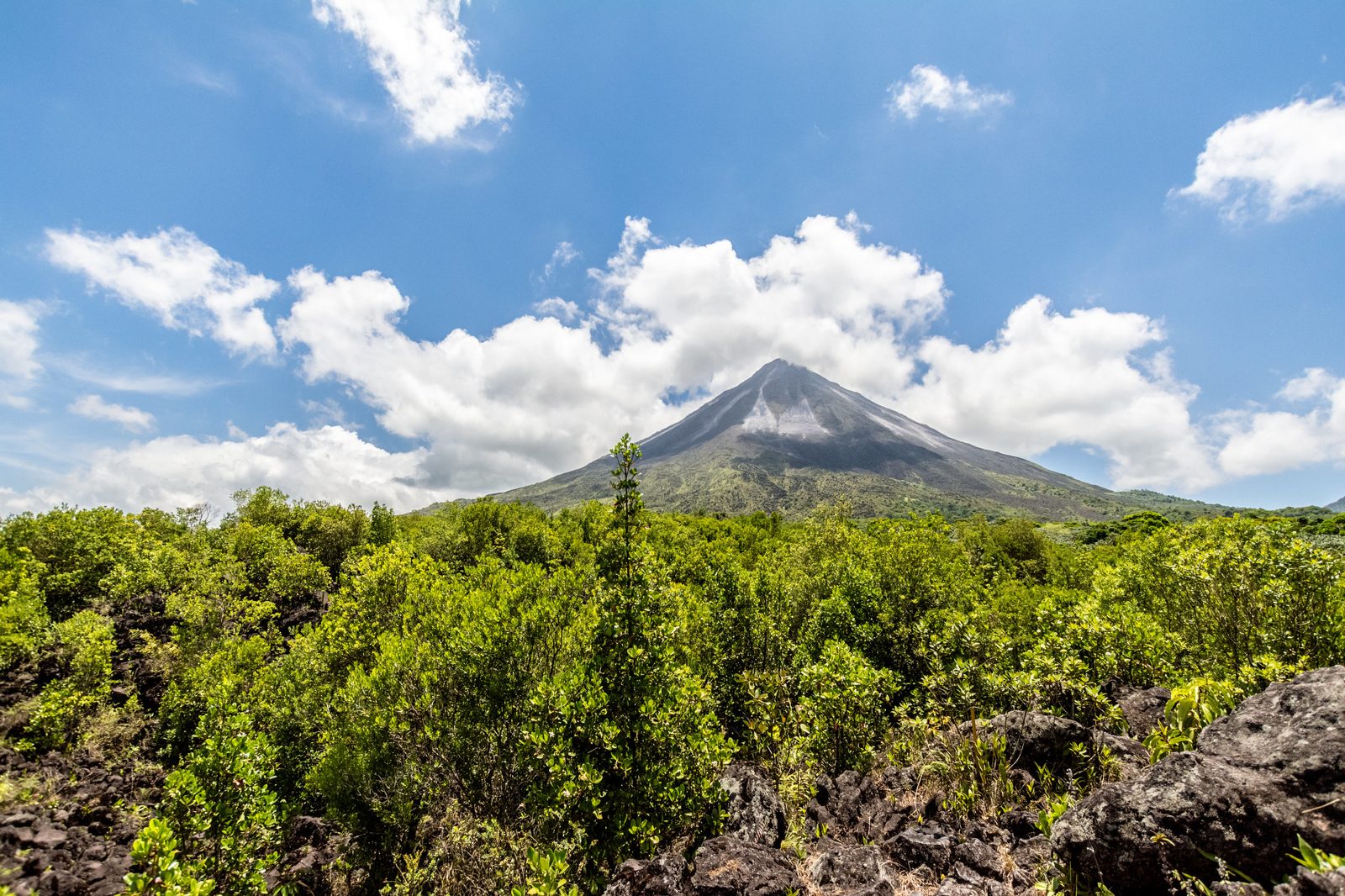
- Arenal Volcano & Hot Springs (La Fortuna) — the postcard of Costa Rica
- Monteverde Cloud Forest — magical mist-covered forests with hanging bridges and ziplines
- Manuel Antonio National Park — beaches, monkeys, and sloths in one compact park
- Corcovado National Park — one of the most biodiverse places on Earth (Osa Peninsula)
- Tortuguero — canals and sea turtle nesting beaches on the Caribbean coast
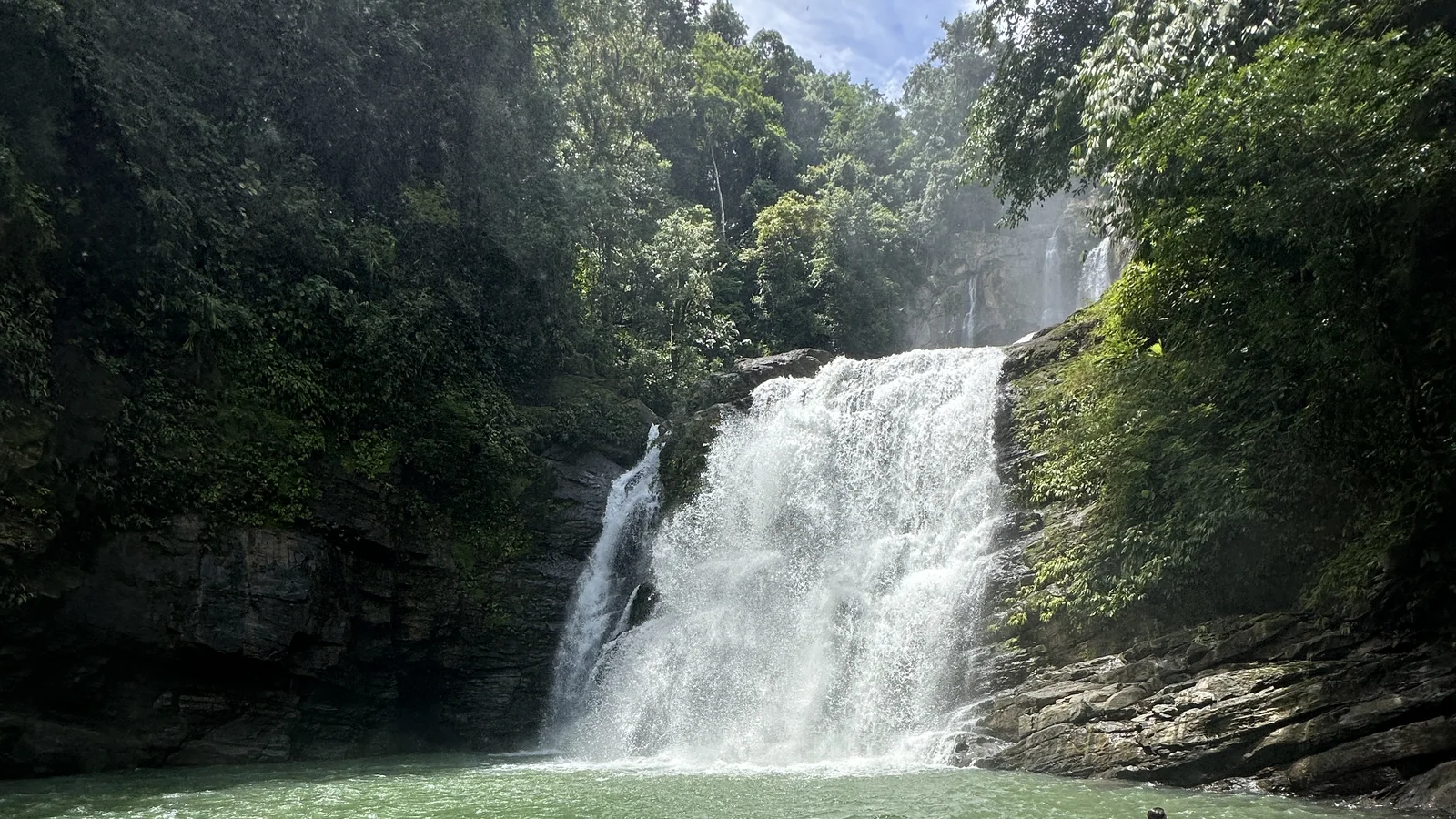
- Rio Celeste — a surreal turquoise blue waterfall inside Tenorio Volcano National Park
12. The Nicoya Peninsula is one of the world's Blue Zones
The Nicoya Peninsula is one of just five "Blue Zones" on the planet — regions where people statistically live longer and healthier lives than anywhere else. Researchers attribute this to a traditional plant-based diet, strong community ties, regular low-intensity physical activity, and a deeply ingrained sense of purpose.
Towns like Nosara, Sámara, and Nicoya attract wellness travelers and digital nomads alongside surf enthusiasts. If you're looking for a place to slow down, reset, and breathe, this is it.
13. It gets dark at 6 PM — Plan your days early
Costa Rica sits just 8–12 degrees north of the equator, so sunrise and sunset don't vary much year-round. Expect the sun to rise around 5:30–6:00 AM and set around 5:30–6:00 PM every single day, regardless of season.
This shapes the rhythm of local life. Wildlife tours, surf sessions, and waterfall hikes start early. By 5:30 PM, it's dark. By 8:00 PM, many small towns are quiet.
Practical implications:
- Don't drive unfamiliar roads after dark if you can avoid it — potholes, animals, and pedestrians on roads without streetlights are real hazards
- Book morning tours rather than afternoon ones
- Download offline maps (Maps.me or Google Maps offline) before heading into remote areas
14. Safety: Costa Rica is safe, but stay alert
Costa Rica consistently ranks as one of the safest countries in Latin America for travelers. Violent crime in tourist areas is rare, and the country has a stable democracy and strong public institutions.
The most common issue tourists face is petty theft — and most of it is preventable:
- Never leave anything in your rental car, even for 5 minutes. Backpacks on the seat, charging cables, sunglasses — all are targets
- Secure your belongings at the beach. Bring as little as possible and take turns swimming
- Use a crossbody bag in San José and busy market areas
- Stick to official taxis (red with a yellow triangle medallion) or pre-booked transportation. Avoid unmarked "pirate taxis."
Ocean safety is also important. Many Pacific coast beaches have strong rip currents and no lifeguards. Always ask locals where it's safe to swim, never ignore warning flags, and don't swim alone at remote beaches.
15. Tipping is customary — Here's what you should know
A 10% service charge is legally required on all restaurant bills in Costa Rica and is automatically added. You'll see it listed as "servicio" on your receipt. Servers don't necessarily expect more on top of this, but leaving extra for excellent service is always appreciated.
Standard tipping guide:
- Tour guides: $5–15 per person, depending on tour length and quality
- Shuttle/transfer drivers: $3–5 per trip
- Hotel cleaning staff: $2–3 per day left in your room
- Restaurant (above the 10%): discretionary, $1–5 extra for great service
Keep small bills and coins handy — change can be scarce in rural areas.
16. Wi-Fi is available, but don't count on it in the Jungle
Most hotels, hostels, and cafés in tourist towns offer free Wi-Fi. In San José, Tamarindo, La Fortuna, Manuel Antonio, and other developed areas, connectivity is generally reliable.
However, in remote destinations — think Corcovado, Tortuguero, deep jungle lodges, or mountain areas — don't expect strong internet. Storms can knock out service for hours.
Stay connected tips:
- Buy a local SIM card from Kolbi or Claro — both are widely available, and data plans are affordable
- If your phone supports eSIM, services like Airalo work well for Costa Rica
- US and Canadian carriers (AT&T, Verizon, T-Mobile) often roam on local Kolbi towers — check your international plan before you go
17. What NOT to expect in Costa Rica
Let's set expectations straight so you're not disappointed:
❌ Ultra-cheap prices.
This is not Southeast Asia or Guatemala. Budget carefully and read up on traveling Costa Rica on a budget.
❌ All-inclusive resorts on every corner.
They exist, but most travelers stay at boutique eco-lodges, small hotels, or guesthouses. This is a feature, not a bug — it keeps more money in local hands.
❌ Fast service.
"Tico time" is real. Meals take longer. Buses don't always run on schedule. Embrace it as part of the pura vida mindset.
❌ Perfectly paved roads everywhere.
Main highways are decent, but secondary roads — especially to beaches and mountain destinations — can be rough, unpaved, or require crossing shallow rivers. A 4x4 is not optional in many areas.
❌ Sloths on every tree.
See point #10 above.
Final Thoughts: Costa Rica is worth every penny
Costa Rica is not the cheapest destination in the region, and it won't apologize for that. What it offers in return — extraordinary biodiversity, a genuinely warm and welcoming culture, world-class adventures, and the healing philosophy of pura vida — is hard to find anywhere else on the planet.
Come with an open mind, realistic expectations, a good dose of flexibility, and plenty of bug spray. You'll leave wondering why it took you so long.
¡Pura vida!
Written by the team at Pura Vida Traveling — your local guide to Costa Rica, based in Quepos/Manuel Antonio. We offer tours, shuttles, car rentals, and personalized travel advice. Questions? Reach us on WhatsApp.
Frequently asked questions
Yes, travel insurance is strongly recommended. Your home health insurance likely won't cover you abroad. Medical care at private clinics in Costa Rica runs $65–150 for minor issues, and evacuation from remote areas can be very expensive without coverage.
Yes, Costa Rica is considered one of the safer countries in Latin America for solo female travel. Apply standard common-sense safety practices, especially at night and on beaches.
January through April offers the best weather across most of the country. July and August have a brief dry window and are great for families. The green season (May–November) offers lower prices and fewer crowds, with mornings typically sunny.
Private or shared shuttles are the most convenient options from both SJO (San José) and LIR (Liberia). Uber operates in the San José metro area. Official airport taxis are orange (SJO) — avoid unmarked vehicles.
In most tourist towns, yes. In remote coastal and rural areas, use bottled or filtered water. Ask your hotel when in doubt.
Lightweight quick-dry clothing, reef-safe sunscreen, insect repellent, a light rain jacket (for green season or cloud forest visits), and sturdy walking shoes or sandals. If visiting Monteverde or high-altitude areas, bring a warmer layer.